
Chocolate, Connection & Actually Feeling Good This Easter
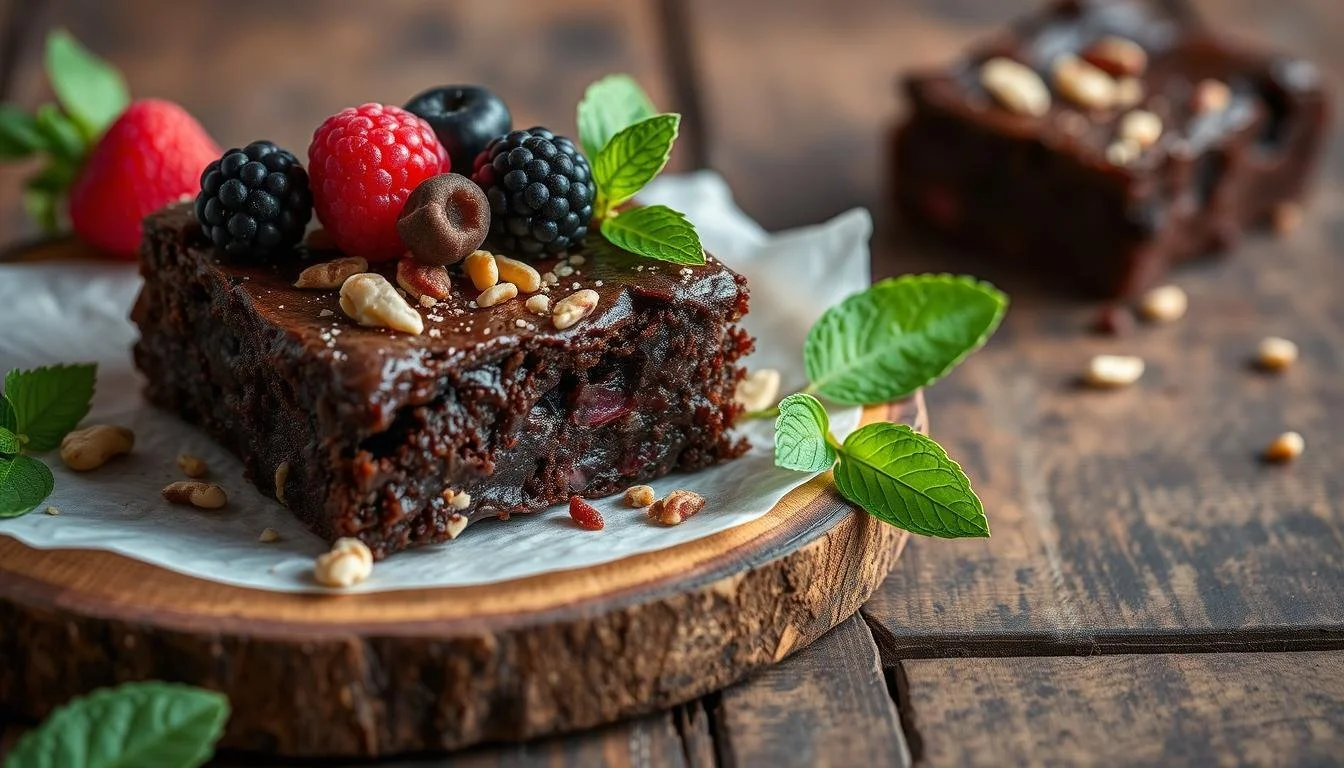
A naturopath's honest guide to enjoying every bite without paying for it on Tuesday.
Easter is one of my favourite times of year and not just for the chocolate (though, let's be honest, that's a big part of it).
It's a season of renewal, rest, and gathering with the people we love. For those of us who hold a Christian faith, it's a profound reminder of grace that restoration is always possible, in every season of life. I think that's actually a beautiful lens through which to approach our health too.
There's no room for guilt or restriction here. This weekend, we nourish ourselves body and soul.
That said, as a naturopath I'd be doing you a disservice if I didn't share a few gentle tools to help you cruise through the long weekend feeling vibrant rather than sluggish. Because there's a real difference between enjoying Easter chocolate and ending up in a three-day sugar spiral on the couch wondering where it all went wrong.
So here's your Easter naturopath playbook 🐣
How to Eat Easter Chocolate Without the Sugar Crash: A Step by Step Guide to Balancing Your Blood Sugar
Blood sugar spikes followed by dramatic crashes are what leave you tired, moody, and reaching for another egg by 3pm. Here's how to enjoy your chocolate and keep things balanced at the same time.
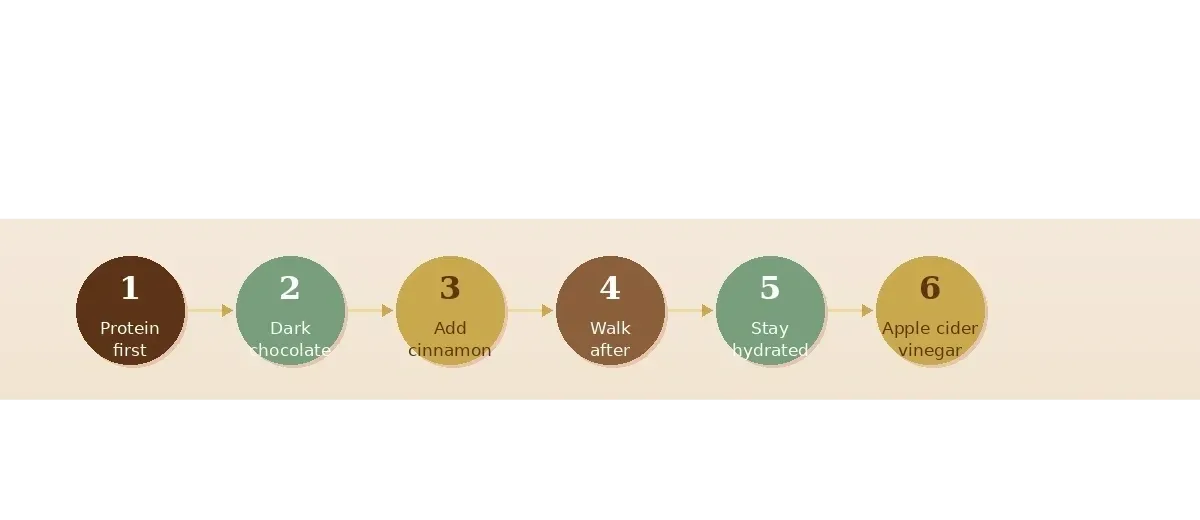
STEP 1: Never Eat Chocolate on an Empty Stomach
Eat something with protein and fat first think eggs (how fitting! 🥚), avocado on sourdough, Greek yoghurt, or a handful of nuts. This slows glucose absorption and prevents that sharp spike-and-crash cycle. Chocolate on an empty stomach is a recipe for the 3pm slump.
STEP 2: Choose Quality Over Quantity
Reach for dark chocolate (70% cocoa or higher) where you can. It contains less sugar, more antioxidants specifically flavonoids and actually satisfies you faster. A couple of squares of good dark chocolate can feel more indulgent than half a hollow bunny. Eat it slowly. Savour it.
STEP 3: Add Cinnamon to Your Day
Cinnamon is one of my favourite blood sugar herbs. Sprinkle it on your morning oats, in your coffee, or on top of your yoghurt. Studies show it can improve insulin sensitivity and reduce post-meal blood sugar spikes. It's delicious and it costs you nothing.
STEP 4: Move After Your Chocolate Moments
A 10–20 minute walk after eating even a gentle stroll around the block activates your muscles to absorb glucose without needing as much insulin. It genuinely makes a meaningful difference to how your body processes sugar. Plus, the autumn Easter air in Australia right now is gorgeous. Get outside.
STEP 5: Stay Well Hydrated
When we're dehydrated, blood sugar regulation becomes harder and cravings intensify. Aim to drink a large glass of water between chocolate moments. Add a squeeze of lemon and a pinch of sea salt for an easy electrolyte boost that also supports digestion.
STEP 6: Apple Cider Vinegar Before a Sweet Meal
A teaspoon to tablespoon of ACV diluted in water before a sweet meal has been shown to blunt blood sugar spikes by improving insulin sensitivity. It doesn't have to be glamorous just a small glass before you sit down to your Easter feast. Your pancreas will quietly thank you.
The Best Herbal Teas for Easter Weekend: for cravings, digestion & rest
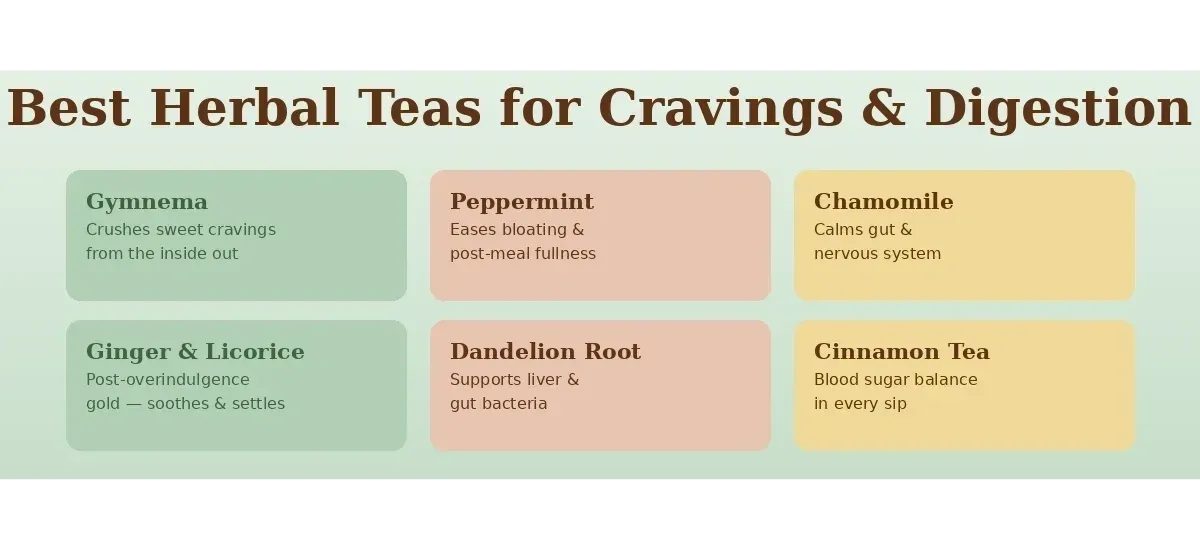
If there's one simple habit I recommend to almost every client, it's drinking more herbal tea. Over Easter, it becomes your best friend. Whether you want to ease sweet cravings, settle an overworked digestive system, or simply slow down and be present there's a tea for that.
🍃 GYMNEMA: The Craving Crusher
Known as the "sugar destroyer" in Ayurvedic medicine, gymnema temporarily blunts the sweet taste receptors on your tongue and helps reduce sugar cravings from the inside out. A cup mid-afternoon can work absolute wonders when the Easter egg bowl is calling your name.
🌸 PEPPERMINT: For Digestion After Overindulging
A classic digestive herb. Peppermint relaxes the smooth muscle of the gut, eases bloating and fullness, and helps your digestive system process a big Easter lunch with a lot more grace. Enjoy a cup after meals.
🌼 CHAMOMILE: Calm Your Gut & Your Mind
Gentle, calming, and anti-inflammatory. Chamomile soothes the gut lining, reduces digestive cramping, and supports the nervous system which matters because stress and blood sugar are deeply connected. This is your Sunday night tea.
🫚 GINGER & LICORICE: Post Overindulgence Gold
This duo is gold for when you've overindulged. Ginger stimulates digestive enzymes and reduces nausea; licorice root is naturally sweet, soothes the gut lining, and takes the edge off sugar cravings without adding to them.
🍋 DANDELION ROOT: Support Your Liver
A gentle bitter herb that supports liver detoxification and bile production important after a heavier, richer Easter diet. It also acts as a mild prebiotic, feeding your good gut bacteria. I have this daily year round not just for Easter.
🌿 CINNAMON TEA: Blood Sugar in a Cup
As mentioned above cinnamon is a blood sugar superstar. A warm cup of cinnamon tea in the afternoon is a genuinely delicious way to keep cravings in check and insulin sensitivity supported.
✨ My Favourite Easter Tea Ritual:
After dinner, brew a cup of ginger and licorice tea, sit somewhere quiet, and breathe for ten minutes. No phone. No noise. It's not just your gut that needs to rest over Easter, your nervous system does too.
A Few More Naturopath Tips for the Long Weekend
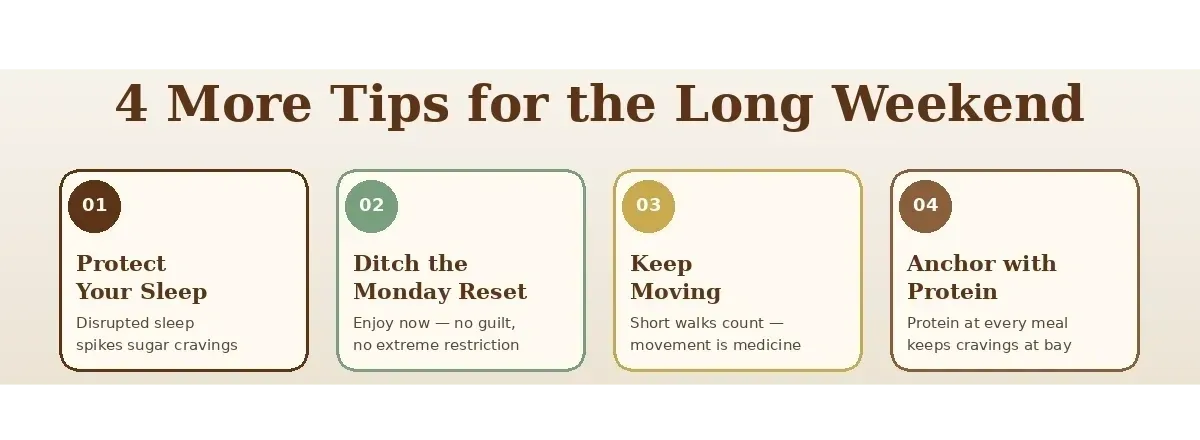
TIP 1: Protect Your Sleep
Just one or two nights of disrupted sleep can significantly impair blood sugar regulation and ramp up cravings for sugar the next day. Late nights are fun but they do come with a metabolic cost. Try to get to bed at a reasonable hour at least some nights, and if you over-do it, a gentle magnesium supplement before bed can help. And if you are part of the country that is ending daylight savings this weekend, its even more important you get your sleep as the clocks change.
TIP 2: Ditch the "I'll Start Again Monday" Mentality
Easter does not need to be a health write-off followed by extreme restriction. That cycle is exhausting and it's what drives cravings in the first place. Enjoy the chocolate. Use the tools above to feel good. Trust your body. You don't need to earn your food or punish yourself for enjoying the weekend.
TIP 3: Keep Moving Even Gently
You don't need a gym or a program. A family walk on Good Friday, a swim on Easter Saturday, a gentle stretch on Easter Sunday morning these small movements keep your metabolism ticking, your mood lifted, and your blood sugar steady. Movement is medicine, and it's free. In Australia the autumn weather is beautiful right now, make the most of it.
TIP 4: Anchor Every Meal with Protein
Protein is your blood sugar's best friend. At every Easter meal breakfast, lunch, dinner include a good source of protein first. Eggs, legumes, quality meat, Greek yoghurt, nuts and seeds. It slows digestion, keeps you fuller for longer, and dramatically reduces the likelihood of reaching for the third Easter egg just because you're bored.
Easter is a reminder that renewal is always available to us. That rest is holy. That gathering around a table with the people we love is one of the most nourishing things we can do. Whatever this Easter means to you I hope it feels like a deep exhale. A pause. A reset.
You don't have to arrive at Tuesday perfectly. You just have to arrive nourished.
Happy Easter, from my table to yours. 🐣🌿
With love,
Jessica
Jessica Louise Naturopath
P.S...
Struggling with Sugar Cravings or Stubborn Weight?
If you find yourself caught in a cycle of sweet cravings, energy crashes, or frustrating weight that just won't shift you don't have to figure it out alone. This is exactly what I help people with, and there's always a root cause worth exploring together.
If you are ready to sort your metabolism out and say good bye to cravings, boost your energy and shift some weight book in for your 1:1 appointment with me.
This blog is for general educational purposes only and does not constitute personalised medical advice. Please consult your healthcare provider for guidance specific to your individual health needs.